What you are testing
SpecOps Biosciences UltraThin Moleskin is a non-padded, cut-to-fit material designed to create a protective interface over intact skin without adding bulky cushioning inside close-fitting footwear.

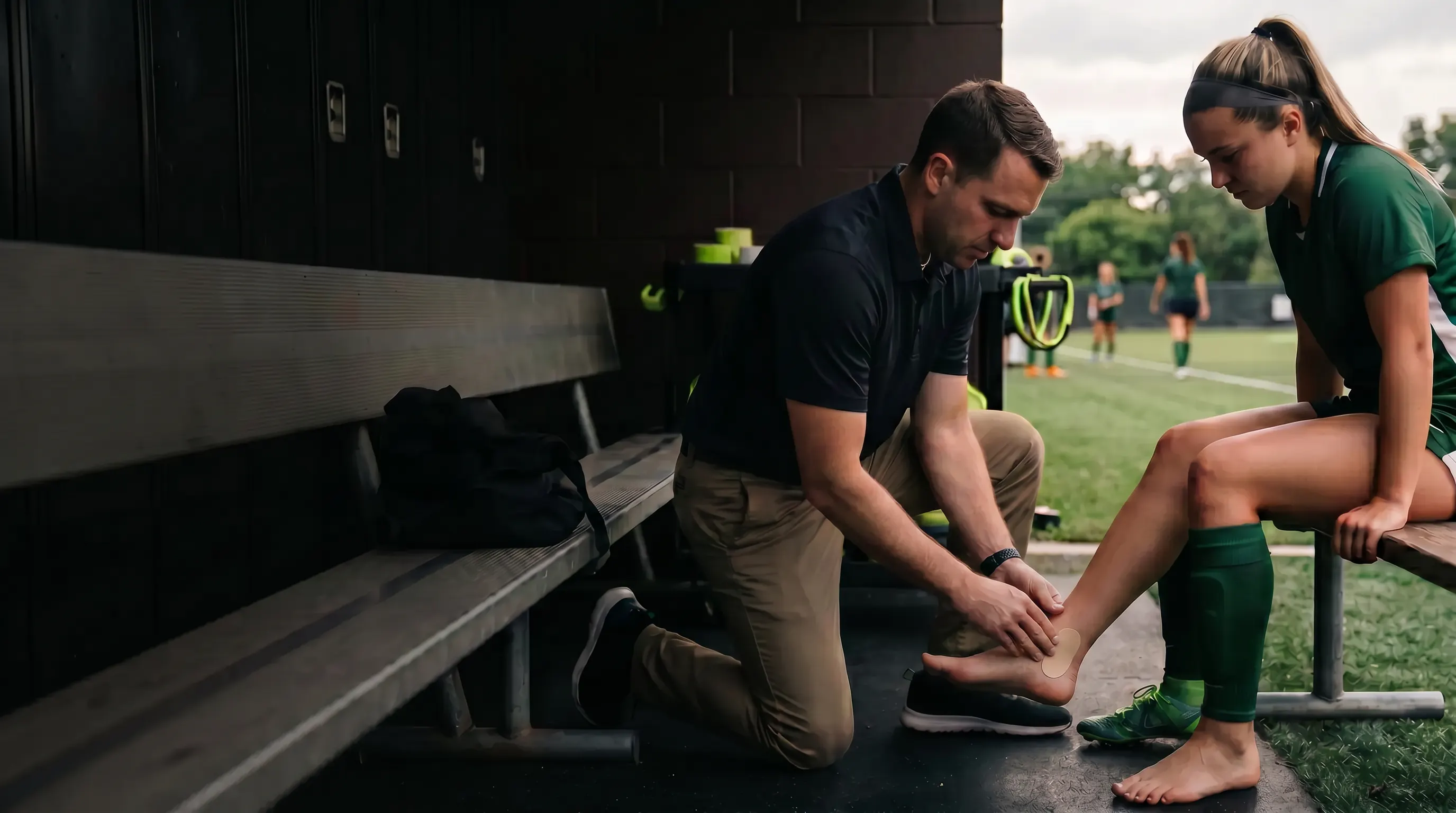
A useful sample should answer a practical question: can a thin, properly applied protective layer become part of your blister-prevention routine before the hot spot becomes an injury?
SpecOps Biosciences UltraThin Moleskin is a non-padded, cut-to-fit material designed to create a protective interface over intact skin without adding bulky cushioning inside close-fitting footwear.
Use it on a known hot-spot zone before a blister forms—such as a heel, toe, arch, or another repeat friction point during hiking, running, rucking, training, or long days on your feet.
Submit a mailing address through the form below. Sample requests are processed within 48 hours. Delivery timing varies by destination, and submitting a request does not create a purchase obligation.
Test during a normal training session or outing where you already understand your footwear and usual hot-spot pattern.
Apply before fluid, torn skin, or an open wound appears. Moleskin is a prevention tool, not a dressing for an already-formed blister.
After activity, inspect the patch edges, skin condition, sock placement, and footwear fit. Replace the material if it lifts, wrinkles, or becomes contaminated.
Use a familiar run or hike to evaluate the sample in the environment that matters: real footwear, real terrain, and enough movement to reveal your repeat hot-spot pattern.

Long trail efforts compound heat, moisture, and repeated foot movement mile after mile.

A loaded backpack, elevation, and uneven terrain make disciplined foot preparation part of every long hike.
Published sports-medicine literature proposes that moleskin can work by distributing shear load across a wider area of skin. The trainer’s goal is not simply to cover the red point. It is to reduce the concentration of repeated deformation at that point.
Interface mechanics
Friction force = coefficient × normal force
Adding thickness inside a fitted shoe can increase local perpendicular—or normal—force. UltraThin is designed to add a protective, shear-distributing interface while minimizing added bulk. Fit, placement, surface area, socks, and skin preparation still matter.
0.69
SpecOps Biosciences reports this measured coefficient of friction for UltraThin Moleskin. It is a manufacturer-reported product specification.
A non-padded profile designed to add a protective interface without bulky cushioning inside fitted footwear.
A 16-foot roll gives trainers enough surface area to cover beyond the smallest pain point.
Designed to adhere to clean, dry skin when the material is smoothed and pressed firmly.
The material only works as well as the application. Build the same sequence into intake, pre-practice preparation, and the first sign of a hot spot.

Use athlete history or the first sign of redness, warmth, or stinging. Apply only while skin is intact.
Remove sweat, skin oil, lotion, and debris. Adhesive performance begins with skin preparation.
Round every edge so a sock has no square corner to catch and begin peeling.
Cut the oval approximately twice the size of the anticipated hot spot to distribute load beyond the smallest signal.
Center it, remove every wrinkle, and rub firmly for 10 seconds to establish the pressure-sensitive bond.
Check the edges, skin condition, and athlete comfort after practice and after water exposure. Replace the moleskin if it lifts, wrinkles, becomes contaminated, or the skin response changes. Do not place adhesive moleskin directly over an already-formed blister.
It is a non-padded, cut-to-fit adhesive material for protecting intact skin at known hot-spot zones. The full product is sold as a 16-foot roll; the free sample is intended to let you evaluate the material and application routine before purchasing.
Apply it before a blister forms—ideally over a known repeat zone or at the first sign of redness, warmth, or stinging while the skin is still intact. Clean and dry the area first so the pressure-sensitive adhesive can bond properly.
No. Do not place adhesive moleskin directly over a formed blister, torn skin, or an open wound. SpecOps Biosciences hydrocolloid blister bandages are the product intended for already-formed blisters. Seek medical care for signs of infection, severe pain, or concerns related to diabetes or poor circulation.
Cut an oval with rounded edges, make it approximately twice the size of the anticipated hot spot, center it over clean and dry intact skin, smooth out every wrinkle, then press and rub firmly for 10 seconds.
The SpecOps Biosciences team processes sample requests within 48 hours. Shipping and delivery timing depend on the destination. You will see a confirmation immediately after the form is submitted successfully.
Product format and application instructions are identified separately from published blister-mechanics research. The sample is for evaluating a prevention routine on intact skin; it is not a substitute for medical care.
“Used this to protect some hot spots I developed on my last hike. Worked great and kept them from turning into blisters. This is a permanent item in my hiking pack now.”
“It stays put even through him playing several games, he says he can’t even feel it after a few minutes of putting it on and best of all NO MORE BLISTERS!”
“I used this as mostly preventative tape whilst walking two Camino’s. It prevented rubbing and my feet survived the constant pounding day after day for over 500km.”
Put UltraThin Moleskin in your training kit. Tell us where to send your sample and allow up to 48 hours for processing.