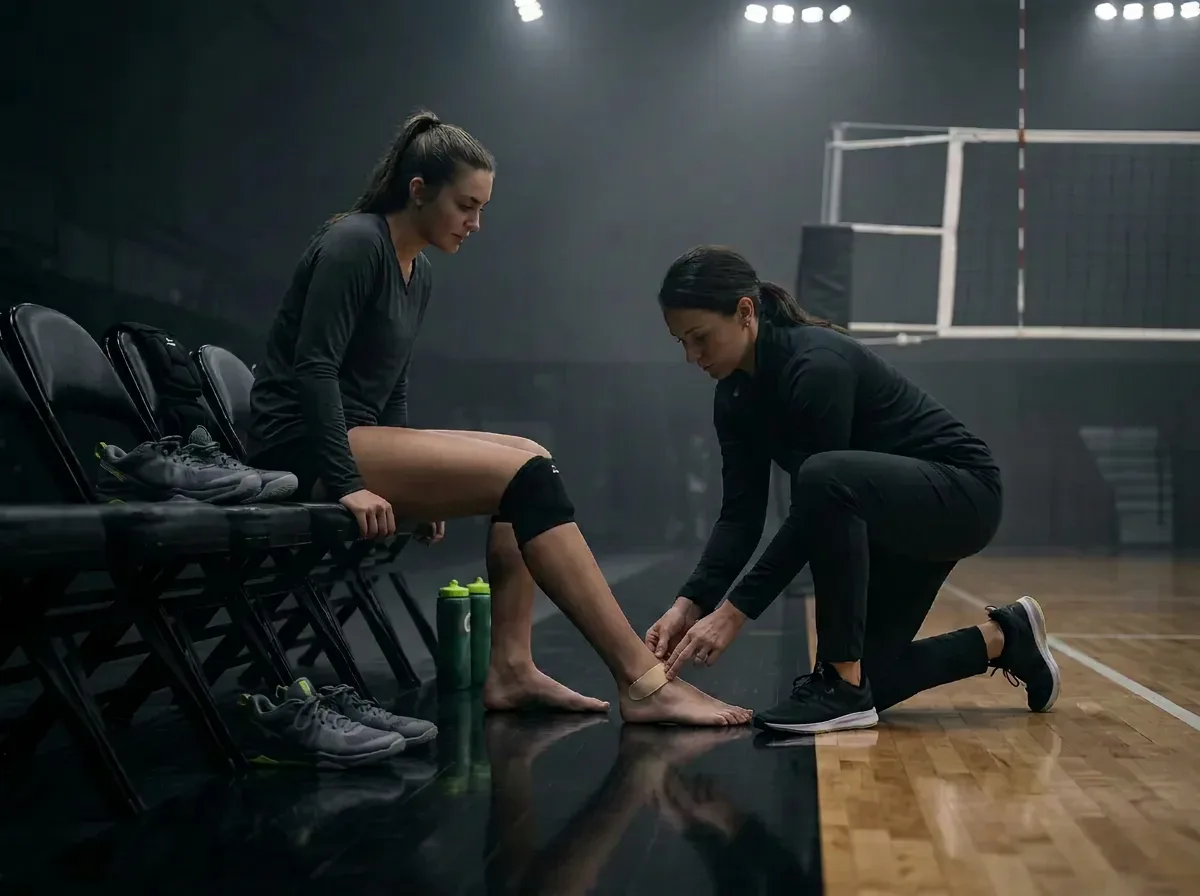
Volleyball
Court shoes, repeated jumping, and rapid directional changes make early heel and forefoot signals worth checking before practice.

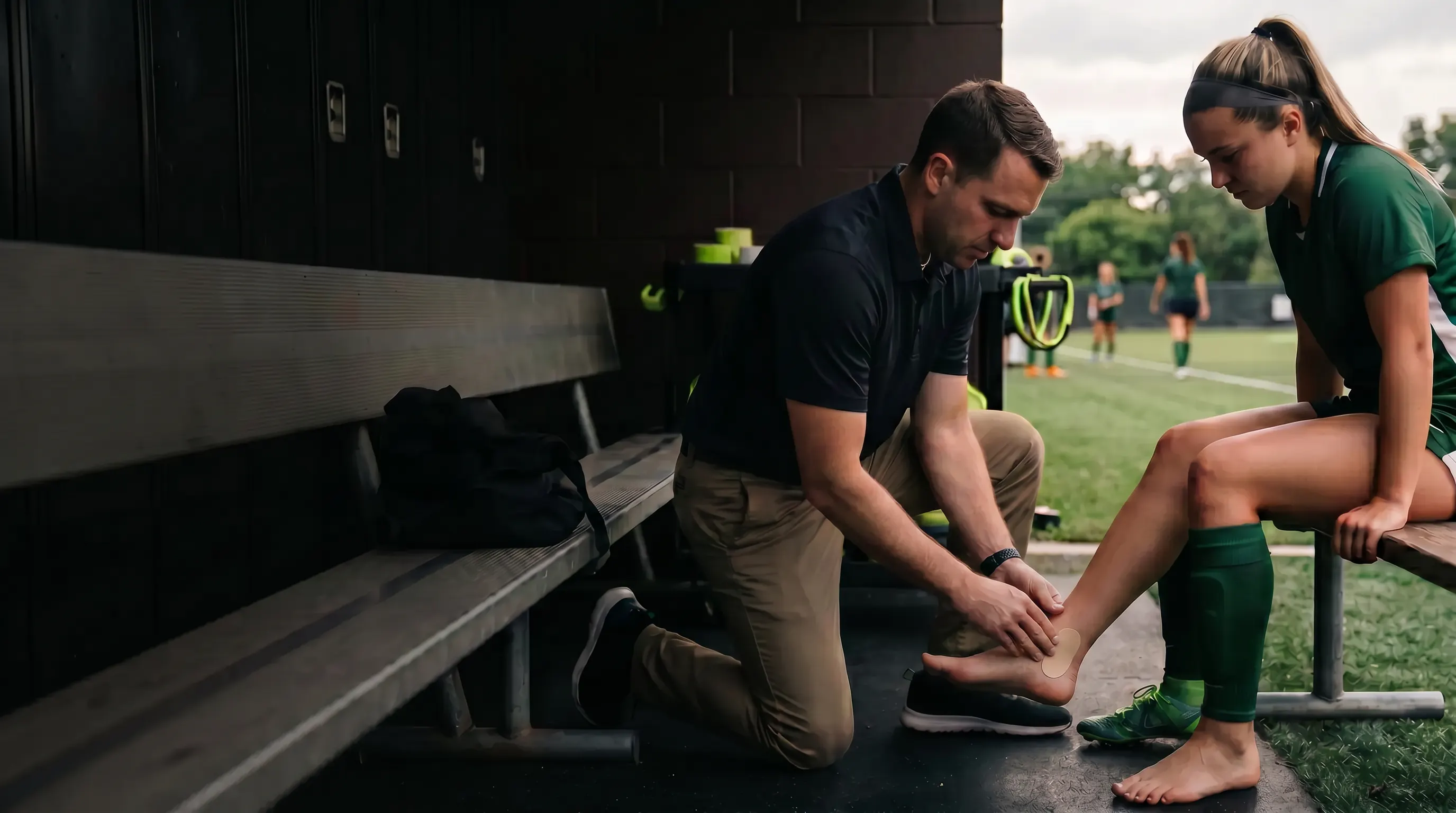
Cleats, court shoes, skates, and marching footwear create different interfaces, but the prevention job stays consistent: identify repeat zones, protect intact skin, and inspect between sessions.
Court shoes, repeated jumping, and rapid directional changes make early heel and forefoot signals worth checking before practice.
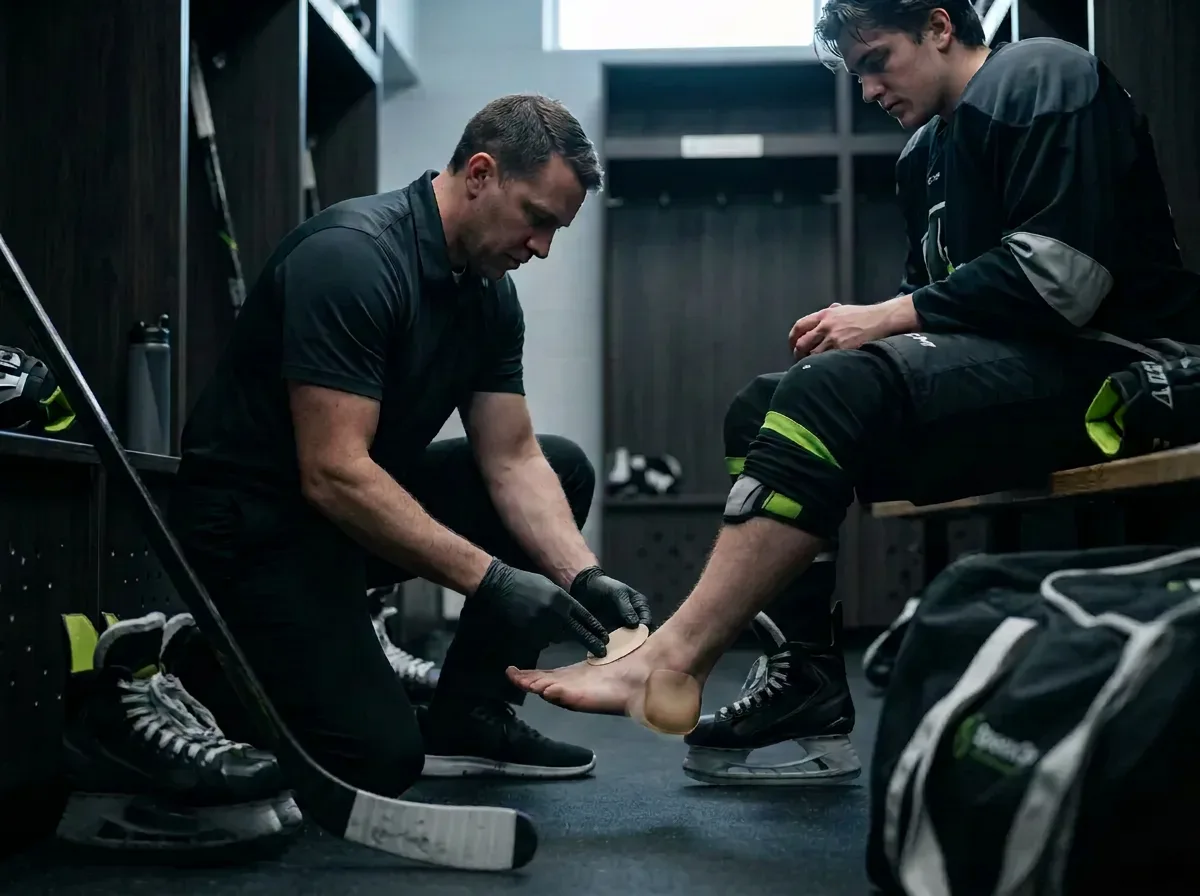
A rigid, close-fitting skate interface makes sock, heel, and skate-fit inspection part of preseason preparation.
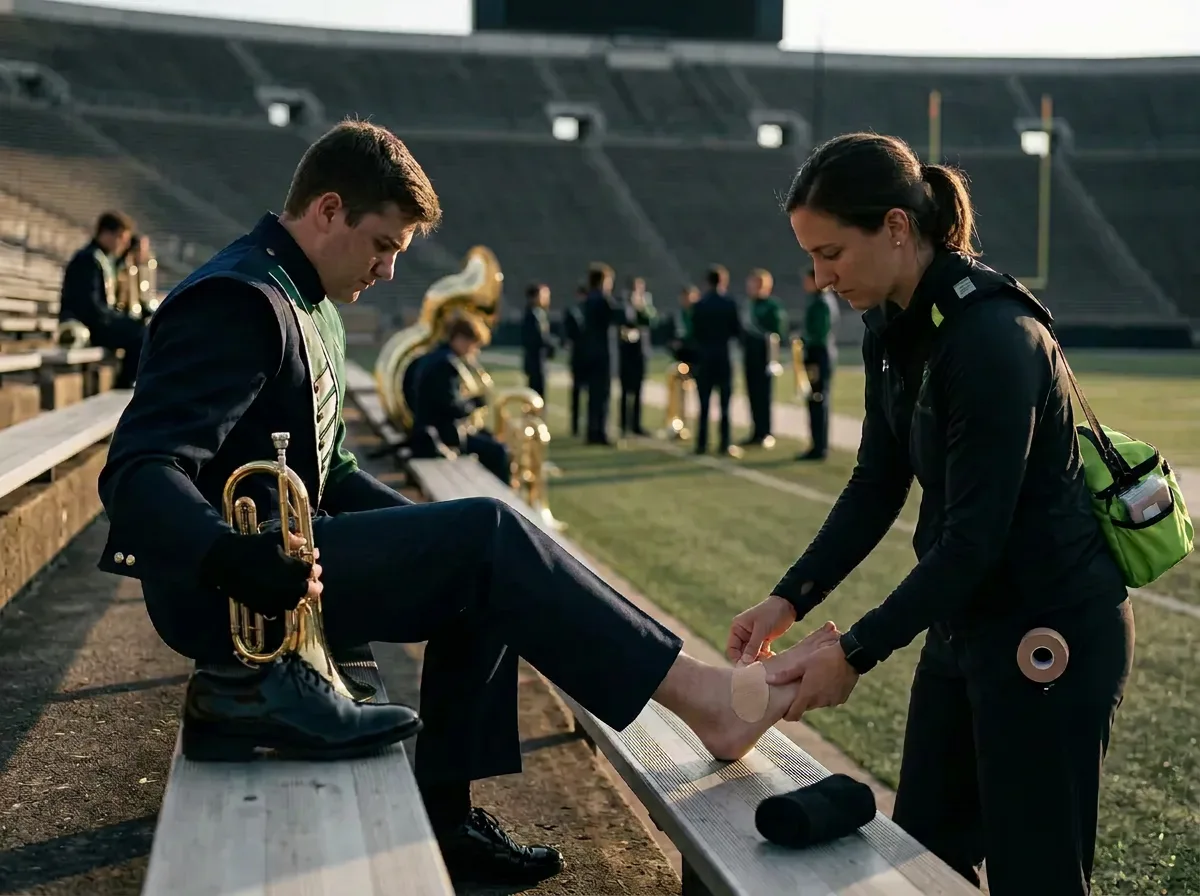
Long rehearsals combine high step counts, heat, and formal footwear—an endurance environment that deserves the same early-signal protocol.
Camp opens with abrupt volume, repeated cutting, new footwear, heat, and moisture. The exact day varies by athlete, but the opening exposure window is when previous hot spots and equipment changes deserve deliberate attention.
In a prospective Marine recruit study, blisters and related injuries produced clinic visits, light duty, and lost training days. Recruits with blisters were 50% more likely to experience another training-related injury.
Prevention is not cosmetic foot care. It is athlete availability management.
Published sports-medicine literature proposes that moleskin can work by distributing shear load across a wider area of skin. The trainer’s goal is not simply to cover the red point. It is to reduce the concentration of repeated deformation at that point.
Interface mechanics
Friction force = coefficient × normal force
Adding thickness inside a fitted shoe can increase local perpendicular—or normal—force. UltraThin is designed to add a protective, shear-distributing interface while minimizing added bulk. Fit, placement, surface area, socks, and skin preparation still matter.
0.69
SpecOps Biosciences reports this measured coefficient of friction for UltraThin Moleskin. It is a manufacturer-reported product specification.
A non-padded profile designed to add a protective interface without bulky cushioning inside fitted footwear.
A 16-foot roll gives trainers enough surface area to cover beyond the smallest pain point.
Designed to adhere to clean, dry skin when the material is smoothed and pressed firmly.
The material only works as well as the application. Build the same sequence into intake, pre-practice preparation, and the first sign of a hot spot.

Use athlete history or the first sign of redness, warmth, or stinging. Apply only while skin is intact.
Remove sweat, skin oil, lotion, and debris. Adhesive performance begins with skin preparation.
Round every edge so a sock has no square corner to catch and begin peeling.
Cut the oval approximately twice the size of the anticipated hot spot to distribute load beyond the smallest signal.
Center it, remove every wrinkle, and rub firmly for 10 seconds to establish the pressure-sensitive bond.
Check the edges, skin condition, and athlete comfort after practice and after water exposure. Replace the moleskin if it lifts, wrinkles, becomes contaminated, or the skin response changes. Do not place adhesive moleskin directly over an already-formed blister.

Athlete proof
“It’s become as important as my headgear.”
Ava Bayless · National Collegiate Women’s Wrestling Champion
Stock the training room before reporting day. Identify previous hot spots during intake. Pre-cut common oval sizes. Teach athletes to report the signal before the blister. Order from the Amazon product page and sign in with an Amazon Business account to obtain Business Pricing.
Training evidence and moleskin mechanism literature are linked separately from SpecOps Biosciences manufacturer-reported product specifications. This page supports professional judgment and does not replace clinical evaluation.